Teach, check, and respond
Use alongside your grade's history units. This is a year of thinking practice, not a replacement for required content instruction.
TEKS + ELPS
Representative skill connections: Grade 2, Grade 4, Grade 8, and U.S. History Since 1877. Match the exact grade and course before teaching.
These are selected skill connections, not a complete course curriculum. Practice scenarios rehearse the skill; historical investigations need authentic, course-appropriate sources.
Current ELPS: K–3 uses §120.20; Grades 4–12 use §120.21. Grade 3 keeps the K–3 codes even in the 3–5 band.
Describe and explain with a partner; write with supporting details when writing is the target.
TEA · Social Studies TEKS, skills matrices & crosswalksTEA · ELPS
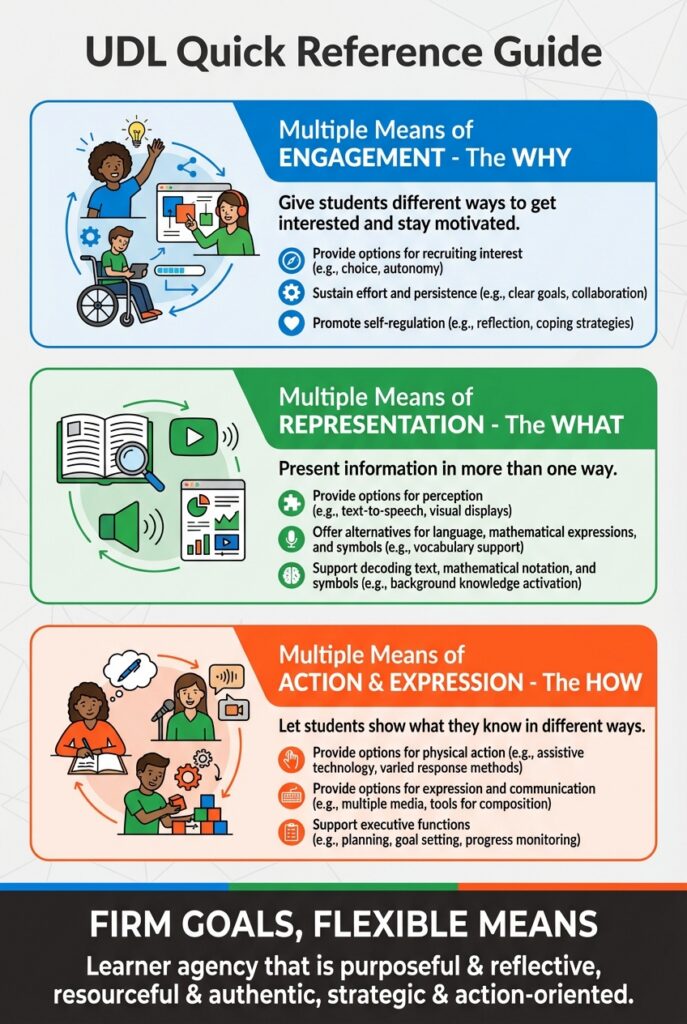
UDL
Read aloud, enlarge the evidence, rehearse in a home language, and offer pointing or drawing when it preserves the content goal. Assess the selected English language domain separately.
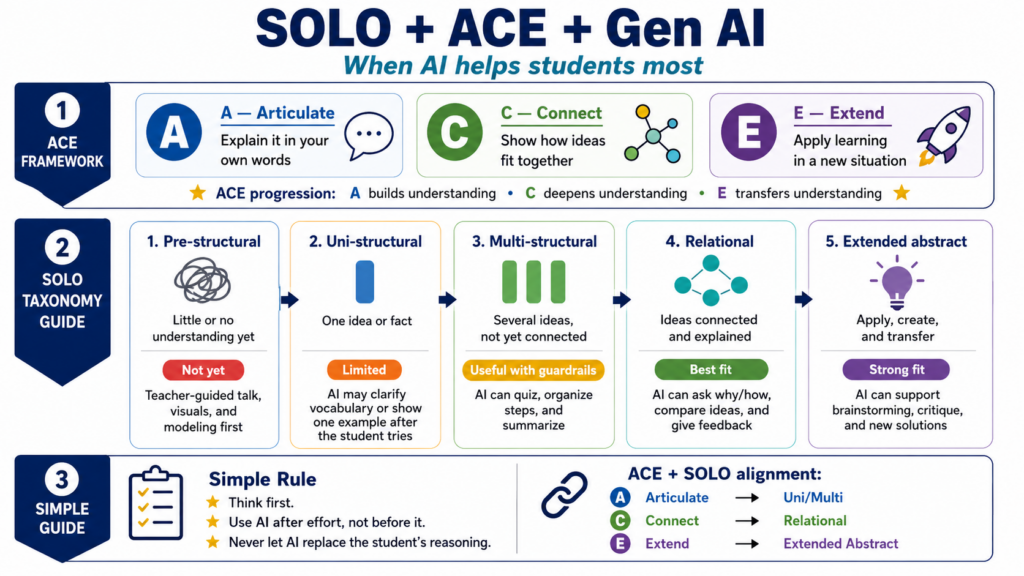
Use evidence, explain a relationship, and recognize a limitation.
Instruction that makes thinking visible
Use the strategy for the task. Effect sizes are research averages across contexts, not promised gains from this site.
Look for an accurate detail, a clear connection, and a limit when the task asks for one. Ask students to revise after specific feedback.
SST · STAAR
SST begins in 2027–28. Use these as formative practice: identify needs, reteach, and check again. These are not official test items or a complete assessment blueprint.
For response practice, identify every part of the question, check each required idea against the evidence, give one specific improvement, and revise. Official STAAR scoring is prompt-specific; ACE/SOLO is a classroom feedback tool, not the state rubric.
Standards checked September 30, 2026